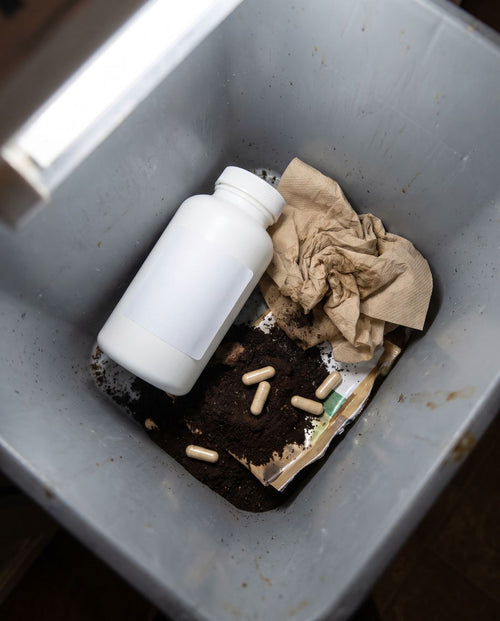
Heart  /  Women's Health

Your Mammogram May Be Showing More Than You Think. Those White Specks Aren't Always About Your Breast

Women over 55: a routine mammogram can show calcium in the arteries of the breast, which researchers link to heart disease. Most women are never told. My mom wasn't.

Laura M.
By Laura M.
Updated Nov 3, 2026 · 7 min read
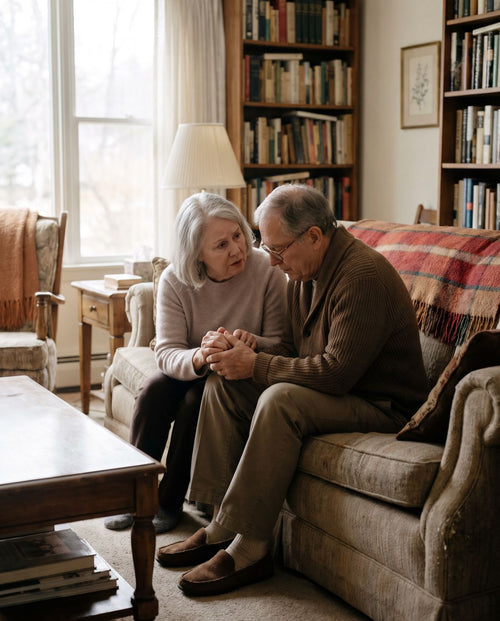
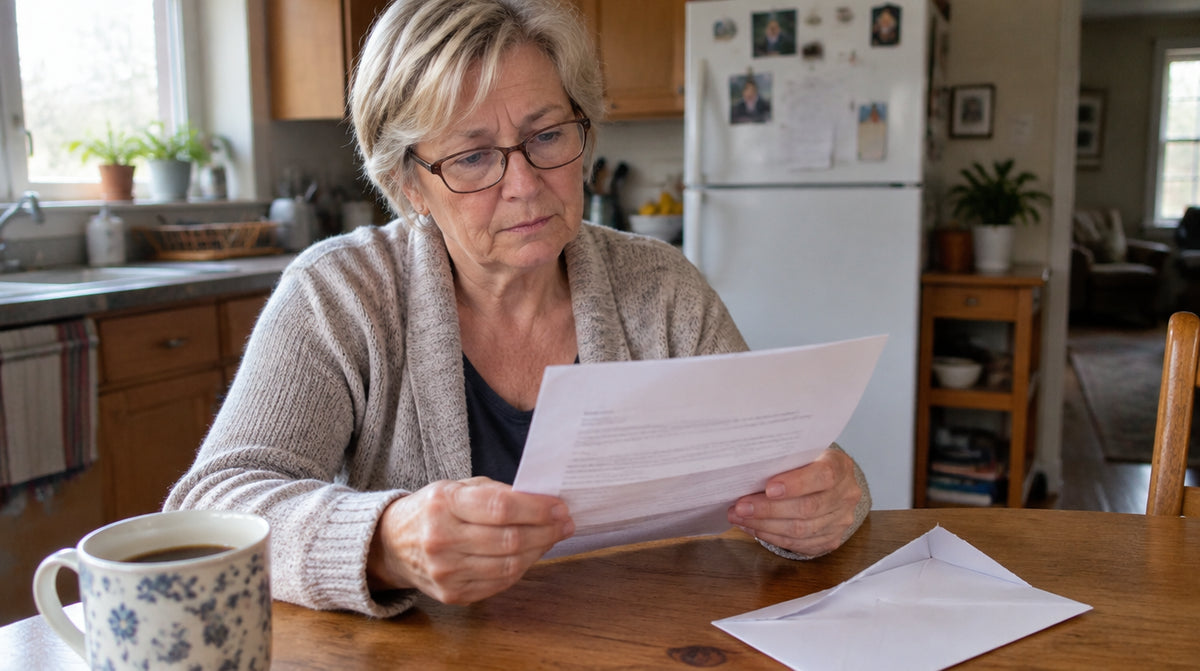
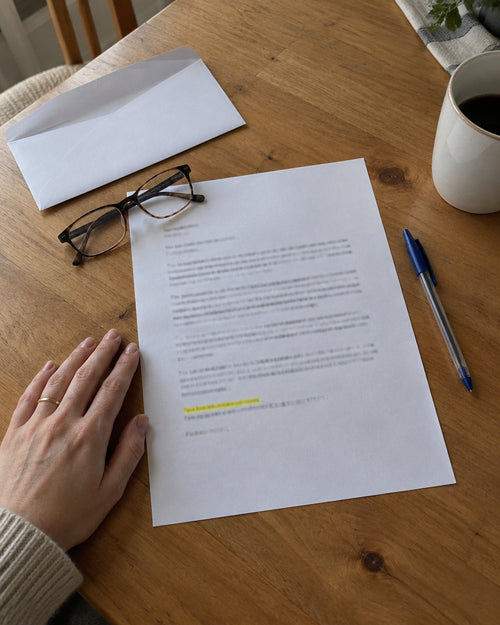
Mom with her yearly mammogram letter. Photo illustration.

Mom is 64. Every October she gets her mammogram, and every October the same letter comes back.

"Normal. No evidence of cancer. See you next year."

She tapes it to the fridge and that's that. This year I was at her kitchen table when she opened it, and she said what she always says: "Good. One less thing."

Then she logged into her patient portal to print a copy for her files. And she found the full report the radiologist wrote. Two pages, not one paragraph.

Near the bottom was a line nobody had ever mentioned to her: "Benign vascular calcifications."
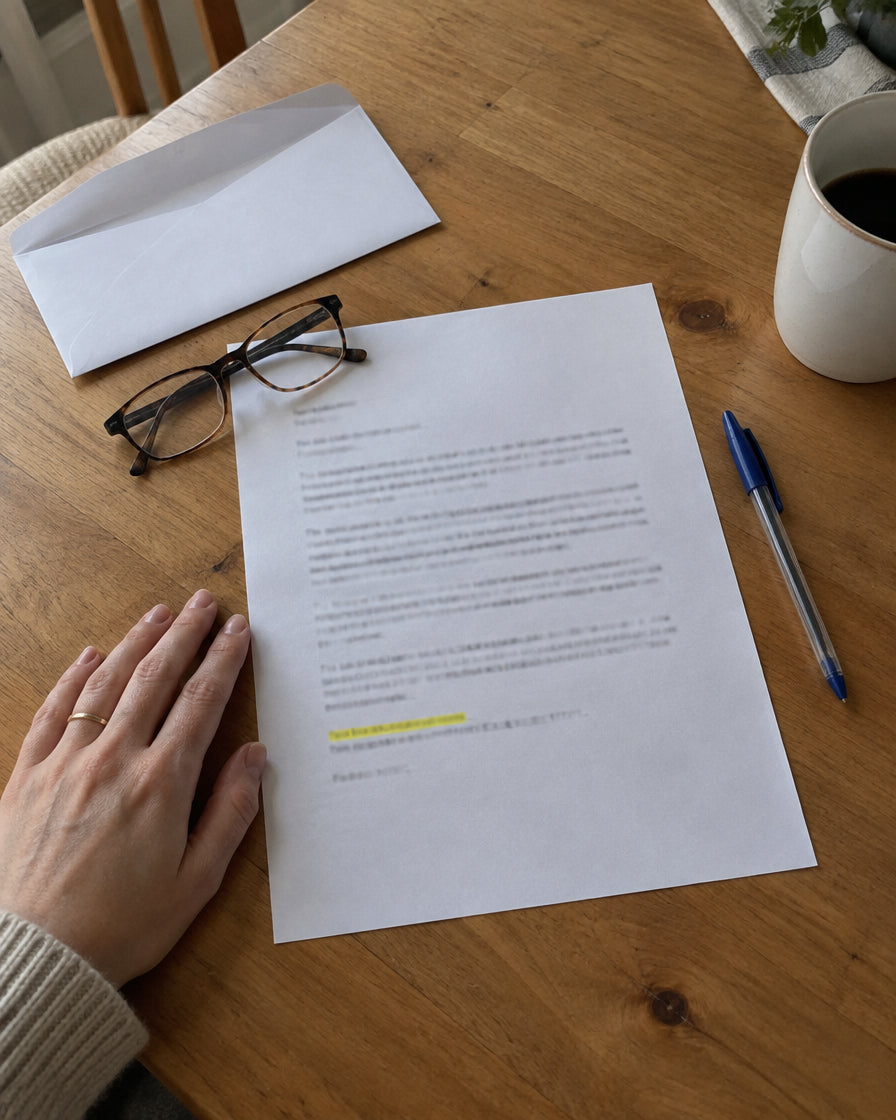
One line near the bottom of the full report. Photo illustration.

"Benign" sounded like good news. But I'd never heard of calcium in the breast's blood vessels, and neither had she. So I went looking. I'm not a doctor. I'm a daughter who read the studies so you don't have to.

Those White Specks Aren't Always About Your Breast

On a mammogram, calcium shows up white. Some white specks are what the radiologist checks for cancer. But some sit in a thin line along a blood vessel, like a track.

That second kind is called breast arterial calcification. It's calcium in the middle layer of the artery walls inside the breast. According to the American Heart Association, it isn't thought to be related to cancer at all.

Which is exactly why it gets left out. A mammogram is a cancer test. If it isn't cancer, it often doesn't make it into the letter you get.

Why Heart Researchers Care About It

In 2022, researchers at Kaiser Permanente in California followed more than 5,000 women aged 60 to 79 for about six and a half years. None had heart disease or breast cancer when they started.

Women whose mammograms showed calcium in the breast arteries were 51% more likely to develop heart disease or have a stroke than women without it, and 23% more likely to develop any cardiovascular disease. The study was published in Circulation: Cardiovascular Imaging, a journal of the American Heart Association.

"Currently, it is not the standard of care for breast arterial calcification visible on mammograms to be reported."American Heart Association news release, March 2022

And it isn't rare. In a 2016 Mount Sinai study of 292 women, published in JACC: Cardiovascular Imaging, 42.5% had it. Nearly half of women in their 60s had some, and nearly three in four over 70. The more calcium in the breast arteries, the more calcium the researchers tended to find in the arteries of the heart.

The lead researcher said radiologists are trained to look for it, but "those findings are usually not included in mammography reports."

When women were asked, 96% said their doctors should tell them about it. Mom would have been one of them.

What To Do Before You Do Anything Else

Your next mammogram: 3 things to ask
  • Ask for the full written report, not just the letter. Most patient portals have it, or call the imaging center.
  • Look for the words "vascular calcifications" or "arterial calcifications."
  • Take it to your doctor and ask what it means for your heart, and whether a heart check makes sense for you.

One more thing the researchers pointed out: if your report doesn't mention it, that doesn't on its own mean your heart is fine. Know your blood pressure and cholesterol numbers either way.

If you read this far, ask for your report and buy nothing, I've done my job. Mom made the appointment that week. Her doctor walked her through it and went over her heart numbers with her. That conversation was free.

The Question Mom Asked Next

On the drive home she said something that stuck with me.

"I've taken calcium pills since I was 55, for my bones. So why is calcium ending up in my arteries?"

Her doctor's answer was honest: calcium in the artery walls has a lot of causes. Age, blood pressure, diabetes, kidney health. There's no pill that takes it back out.

But her question sent me down one more road. And it led to a vitamin most women over 55 have never been told about.

The Vitamin That Tells Calcium Where To Go

It's vitamin K2. Not K1, the one in spinach. K2.

Your body uses K2 to switch on two proteins. One, osteocalcin, helps bind calcium into your bones. The other, matrix Gla protein, is made in the walls of your blood vessels.* Think of K2 as the traffic cop that helps send calcium to your bones, where you want it.*
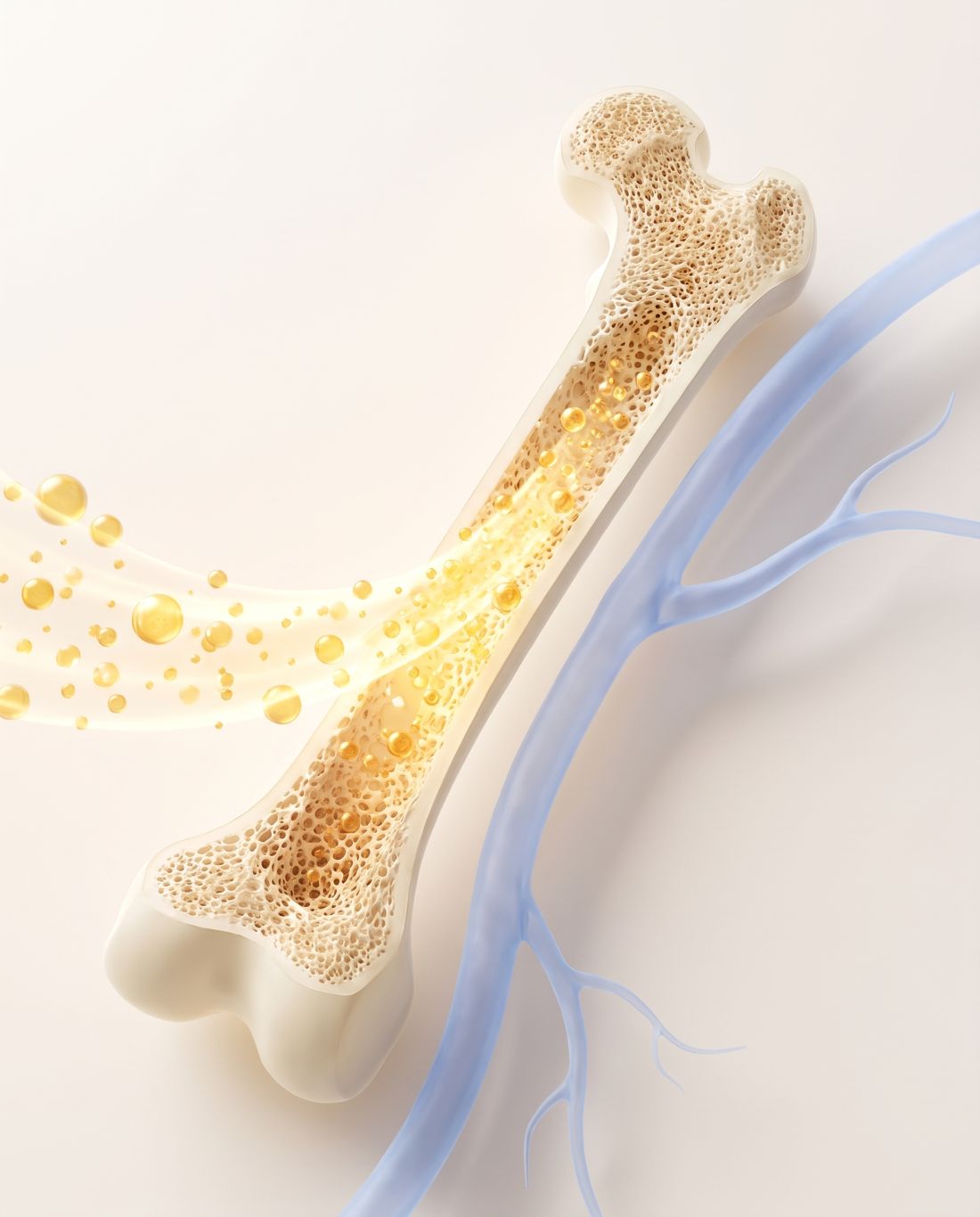
K2 helps send calcium into your bones, where you want it.*

180 mcg of K2 as MK-7 a day is the amount used in a 3-year study of healthy postmenopausal women (Knapen, 2013). And the richest food source of K2 on earth is a Japanese breakfast food most Americans have never tasted.

Natto: Japan's 1,000-Year-Old Breakfast

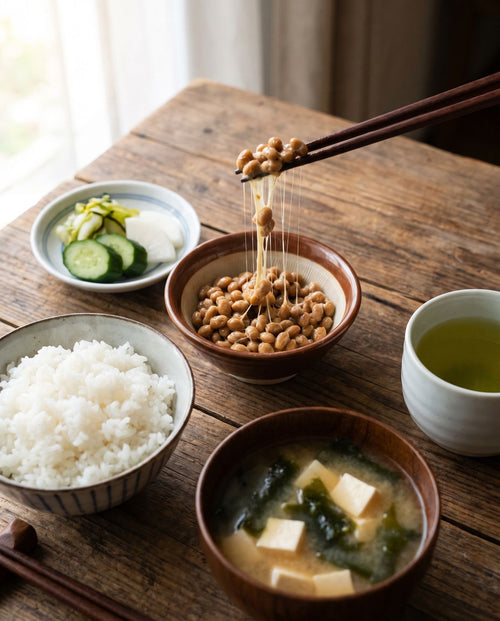
Natto is soybeans fermented with Bacillus subtilis natto. Japan has eaten a small bowl with rice every morning for about a thousand years.
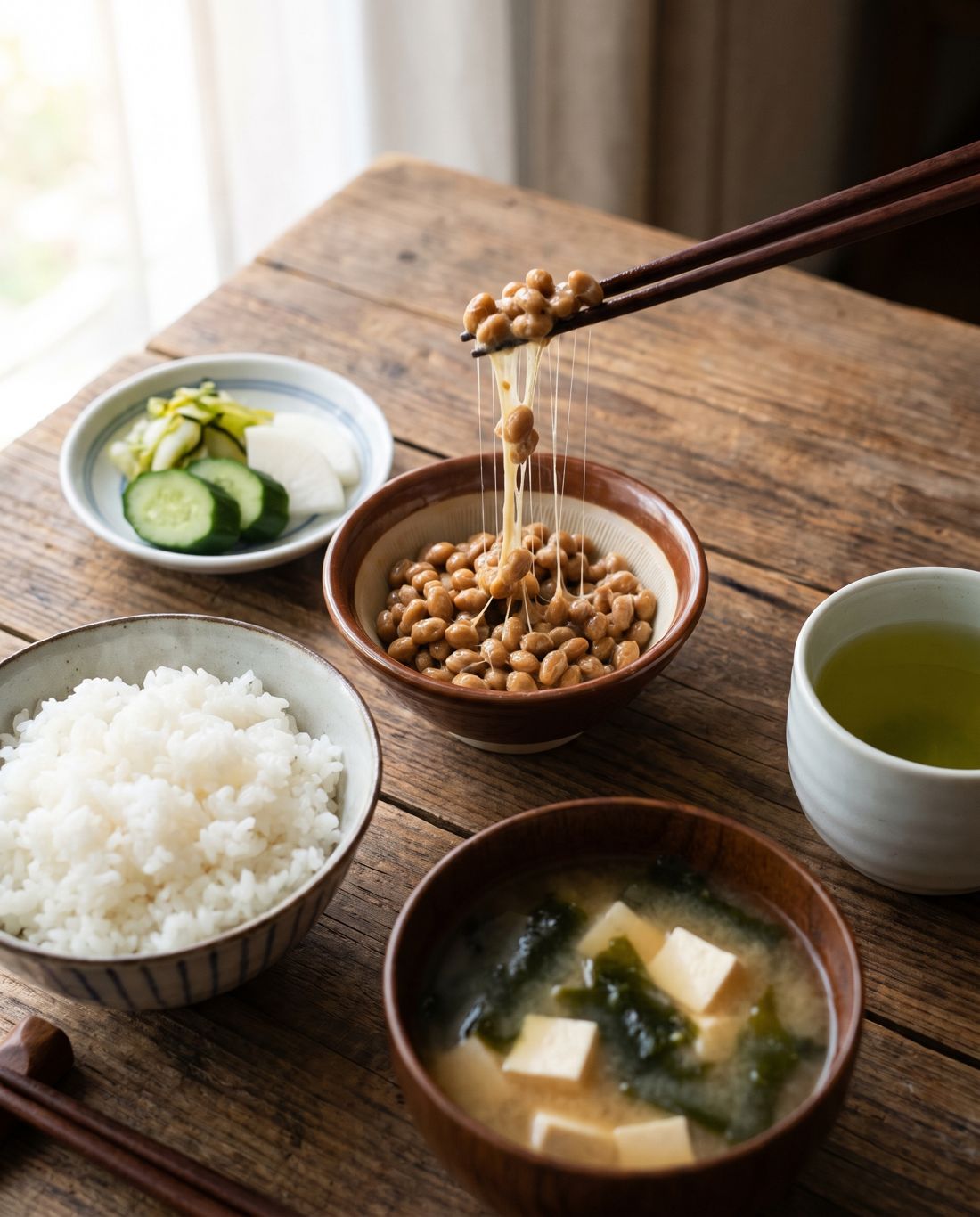
A traditional Japanese breakfast: rice, miso, pickles and a small bowl of natto.

It has a second famous nutrient. In 1980, Dr. Hiroyuki Sumi tested 173 foods for one that could break down fibrin, a sticky protein your body uses as a patch. Only natto did. He named its enzyme nattokinase, and it has been studied ever since for its role in supporting healthy blood flow.*

So one bowl gives you both: the K2 that helps send calcium to your bones, and the enzyme that supports healthy blood flow.*

The Problem: Mom Will Never Eat It

I bought natto at the Asian grocery store. Mom took one sniff and pushed it across the table. It's sticky, slimy, and the smell gets compared to old socks. She wasn't going to eat it every morning. Most of us won't.
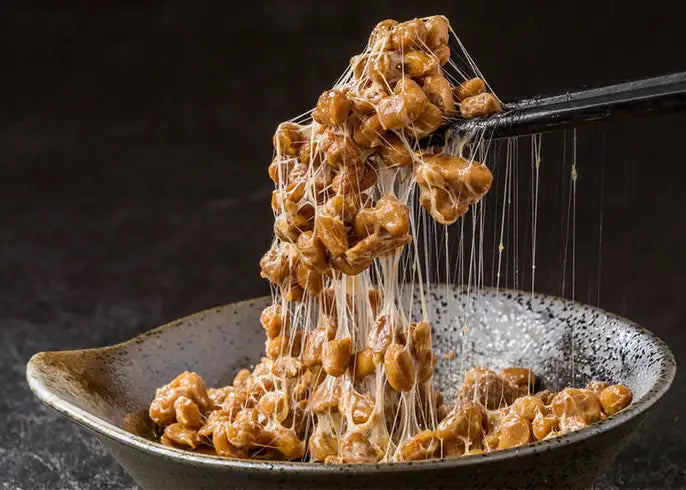
Real natto: sticky stringsReal natto
✕Sticky, slimyStrings off the chopsticks and a smell people compare to old socks.
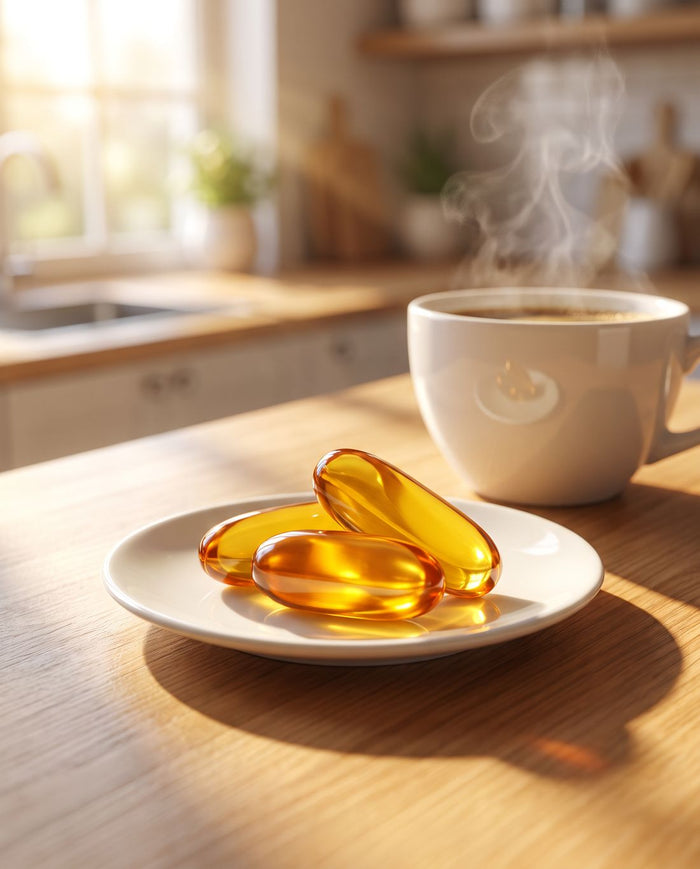
Chōju softgels next to a coffee cupOne softgel
✓No smell, no stringsNo taste. Ten seconds with your coffee.
Same tradition. One of them you will actually take every morning.

What Mom Takes Now

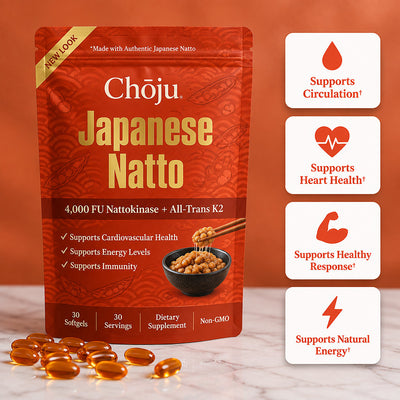
The version we settled on is Chōju Japanese Natto. One softgel with 180 mcg of vitamin K2 (MK-7), the same amount as that 3-year study, plus 4,000 FU of nattokinase from authentic Japanese natto. It adds 2,000 IU of D3, which helps you absorb calcium, and 500 mcg of B12, which many of us absorb less of with age.* All sealed in MCT oil. No bowl. No smell.
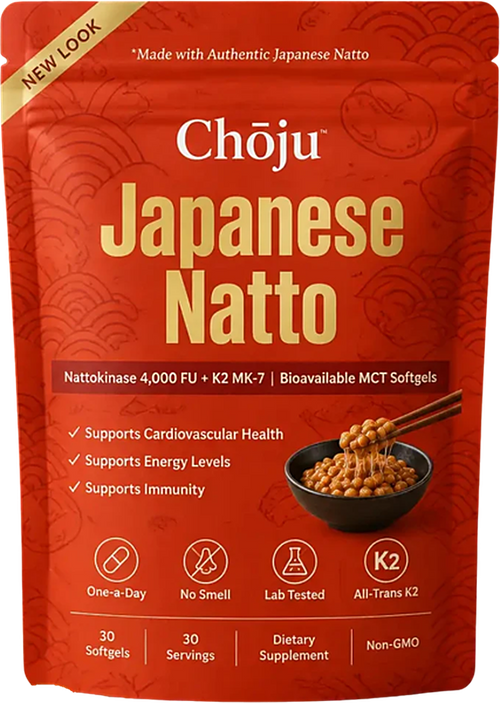
4 in 1
Four things. One softgel.
Chōju Japanese Natto pouch
1 softgel a day
30 per bag
01
4,000FU
Nattokinase
The enzyme from real Japanese natto
02
180mcg
Vitamin K2 (MK-7)
Natto's other half. Helps send calcium to bones*
03
2,000IU
Vitamin D3
Helps you absorb calcium*
04
500mcg
Vitamin B12
Many of us absorb less after 60*
All four sealed in MCT oil. Other ingredients: MCT oil and the softgel shell. No maltodextrin.

Let me be very clear: Chōju is not a heart medicine. It won't remove calcium from your arteries, it doesn't replace anything your doctor prescribes, and it's no substitute for having your report read by your doctor. What there's research on is K2 helping send calcium to your bones and nattokinase supporting healthy blood flow, and that's all Chōju claims.*

Mom showed the label to her doctor before she started, because she takes a blood pressure pill. Please do the same.

Talk to your doctor first if you take a blood thinner. Nattokinase and vitamin K2 both matter if you take warfarin, Eliquis, Xarelto, Plavix or daily aspirin, have a bleeding disorder or surgery scheduled. Chōju contains soy. Never stop or change a prescription to try a supplement.

See the one Mom takes ↓

A Discount For Readers

A tub of imported natto every morning is $4 to $6, plus the rice, the cleanup and the smell. One Chōju softgel is as little as 40¢ a day on Buy 3, Get 2 Free with Subscribe & Save.

I asked the Chōju team for a discount for readers of this page, and they agreed to their Pre-Black Friday pricing. They also give you 120 days. If it doesn't earn its place in your morning, you get the product price back. No need to send anything back.

See the reader discount ↓

Sources: Iribarren C. et al., Circulation: Cardiovascular Imaging, 2022 (American Heart Association news release, March 15, 2022; Diagnostic Imaging). Margolies L. et al., JACC: Cardiovascular Imaging, 2016 (TCTMD, March 2016). Margolies L. et al., AJR, 2019, survey of women on BAC reporting (cited by Diagnostic Imaging). Knapen M. et al., 2013, vitamin K2 (MK-7) in postmenopausal women.

Ask for the report,
Laura M.

P.S. Before your next mammogram, ask them to send you the full report, not just the letter. It takes one phone call.

P.P.S. If you do try Chōju, get 3 bags. Eight weeks is a fair test, and the 120 days cover you either way.
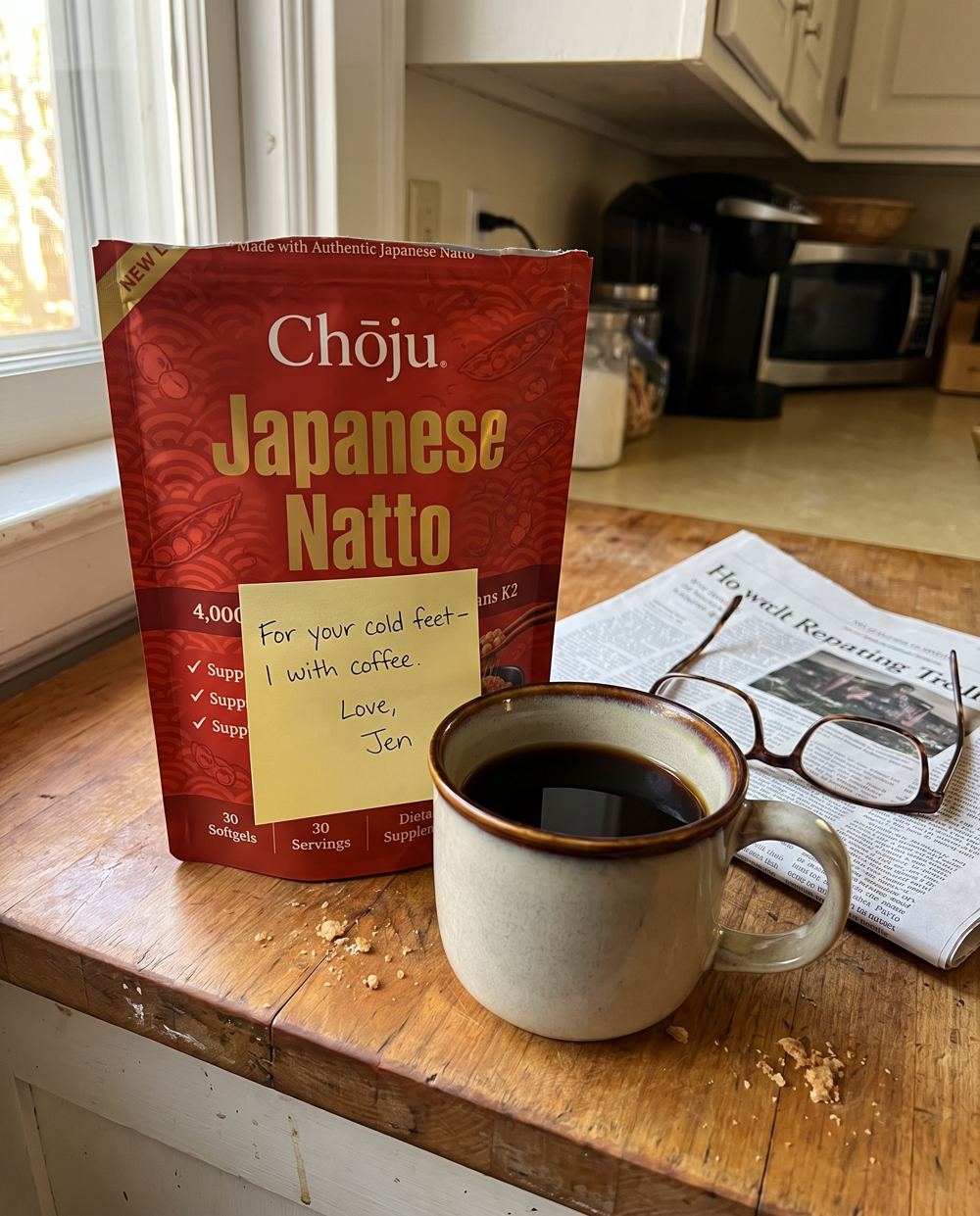
Chōju pouch on a kitchen table with a handwritten note
120DAYSMoney-back guarantee

120 Days To Decide. Or Your Money Back.

Take one every morning for up to 120 days. If it doesn't earn its place in your morning, email Chōju and get the product price back. No need to send anything back.

Your first 120 days

What To Expect, Honestly

Nothing on day 1. Give it 8 weeks. Here is the timeline we tell everyone.*

  1. This week

    Ask for your full report

    • Log in to your patient portal, or call the imaging center and ask for the written report, not just the letter.
    • Look for the words "vascular calcifications" or "arterial calcifications".
    • Book a visit to go over it with your doctor.
    Ask for your full report
  2. Weeks 1 to 4

    One softgel with breakfast

    • Show the label to your doctor first, especially if you take a blood thinner or daily aspirin.
    • One softgel, same time, next to the coffee. No smell, nothing to mix.
    • K2 is not something you feel on day one. It is a daily habit.
    One softgel with breakfast
  3. Weeks 4 to 8

    Make it automatic

    • Same softgel, same time, every morning.
    • Week 8 is a fair time to decide if it has earned its place.
    • You still have until day 120 to decide.
    Make it automatic
  4. Month 3 and beyond

    Part of the morning

    • One softgel next to the coffee, like Japan has done with natto for 1,000 years.
    • Keep your yearly mammogram, and keep asking for the full report.
    • Subscribers can pause or cancel refills anytime.
    Part of the morning

*Individual results vary. Chōju is a dietary supplement, not a medicine.

For readers of this article

The Reader Discount

Pre-Black Friday pricing. Most readers start with 3 bags: eight weeks is a fair test, and the 120-day guarantee covers you either way.

Pre-Black Friday pricing ends in02:00:00
Most popularChōju Japanese Natto, 3 bags

Buy 2, Get 1 Free

3 bags · 90 softgels · 90-day supply
Free US shipping

$83.32$149.97

Get 3 bags →
Best valueChōju Japanese Natto, 5 bags

Buy 3, Get 2 Free

5 bags · 150-day supply · Free US shipping
As little as 40¢ a day with Subscribe & Save

$99.99$249.95

Get 5 bags →
120-day money-back guaranteeNo need to send it backFree US shipping

Talk to your doctor first if you take a blood thinner. Nattokinase and vitamin K2 matter if you take warfarin, Eliquis, Xarelto, Plavix or daily aspirin, have a bleeding disorder or surgery coming up. Contains soy (natto is fermented soybeans).

Quick Answers

Can Chōju remove calcium from my arteries?

No. Chōju is a dietary supplement, not a medicine, and it won't remove calcium from anything. Vitamin K2 helps your body send calcium to your bones, and nattokinase has been studied for its role in supporting healthy blood flow.* That is all Chōju claims.

My report says "vascular calcifications." What should I do?

Take the report to your doctor and ask what it means for your heart, and whether a heart check makes sense for you. Never stop or change a medication on your own, and don't use a supplement in place of what your doctor tells you.

My report doesn't mention it. Does that mean my heart is fine?

Not necessarily. Many reports leave it out, and researchers say having no calcium in the breast arteries doesn't on its own mean low risk. Ask your doctor about your own heart numbers.

Will I feel it?

Probably not. K2 and nattokinase work quietly, so most women take Chōju as a daily habit, like a vitamin. If it doesn't earn its place, you have 120 days to get the product price back.

Is it safe with blood thinners?

Talk to your doctor first if you take a blood thinner (warfarin, Eliquis, Xarelto, Plavix) or daily aspirin, have a bleeding disorder or surgery planned. Nattokinase and vitamin K2 both matter here. Never stop or change a prescription to take a supplement.

What's in it?

4,000 FU nattokinase from Japanese natto, 180 mcg vitamin K2 (MK-7), 2,000 IU vitamin D3 and 500 mcg vitamin B12. Other ingredients: MCT oil and the softgel shell. No maltodextrin, no powder fillers. Contains soy.

Does it smell or taste like natto?

No. Real natto is sticky and smells strong. Chōju is sealed inside a softgel: no smell, no strings, no taste.

How big is the softgel?

It's a smooth, oil-filled softgel, one a day. Softgels go down easier than dry tablets for most people. Take it with water and breakfast.

Will it upset my stomach?

Take it with food. It's sealed in MCT oil with no powder fillers. If anything doesn't agree with you, stop and contact Chōju for a refund.

Why not buy cheaper nattokinase on Amazon?

Flip the bottle. Most is dry powder in a capsule, often 2,000 FU (so 2+ a day), often with maltodextrin, and usually no K2. Many marketplace supplements can't be returned once bought. Chōju is 4,000 FU sealed in oil, with K2, D3 and B12, and a 120-day guarantee.

Can I return it?

Yes. Email Chōju within 120 days for a full refund of the product price. No need to send anything back.

How does Subscribe & Save work? Can I cancel?

Choose it on the product page to save 40% on every order. Refills ship every 30 days, and you can skip, pause or cancel anytime.

CommentsMost relevant ▾
👤

Comments are moderated. Chōju does not reply with medical advice; please ask your doctor about your own situation.

Related reading

This is an advertisement and not an actual news article, blog, or consumer protection update. The story on this page is illustrative and individual experiences vary. *These statements have not been evaluated by the Food and Drug Administration. This product is not intended to diagnose, treat, cure, or prevent any disease. Talk to your doctor first if you take a blood thinner. Contains soy. Images are illustrations; individual results vary. The 120-day guarantee covers the product price; see our Refund Policy. Research summaries refer to nattokinase and vitamin K2 as ingredients, not to Chōju as a finished product.

Contact|Privacy Policy|Terms|Refund Policy
See the reader discount ↓120-day money-back guarantee · Free US shipping