
I Spent $312 On Nattokinase That Did Nothing. Then I Found Out What Happens To The Enzyme Before You Even Open The Bottle
Three brands. Eleven months. $312.
That's what I spent on nattokinase for my mom before I figured out why none of it did a thing.
If you've ever taken nattokinase for weeks, felt absolutely nothing, and quietly decided "it just doesn't work for me"… this is for you.
Because I don't think it was you. I think it was the capsule.
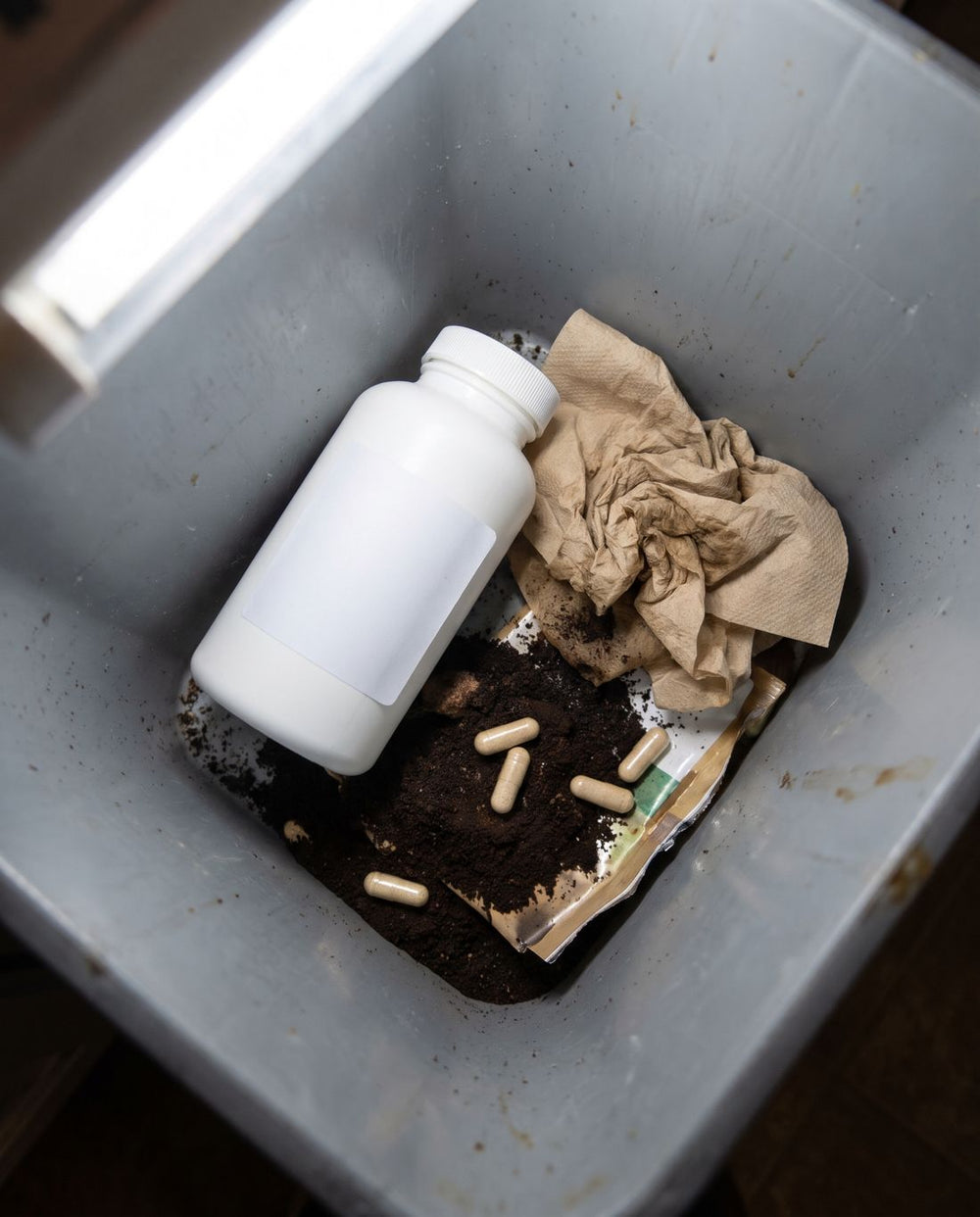
The Bottle In The Bin
My mom has had cold hands and feet for as long as I can remember. Socks to bed. A hot water bottle every night. Gloves at the dinner table in October.
A friend from church swore by nattokinase. So we bought the bottle with the most reviews. Two capsules a day, two months. Nothing.
We tried a "stronger" one. 10,000 FU. Nothing, except she said it made her feel a bit light-headed.
We tried a third. Nothing.
The last bottle went in the bin half-full, and Mom said the words I'll never forget: "I think I'm just too old for this stuff to work."
The Question That Changed Everything
A few weeks later I was reading about how nattokinase was discovered. In 1980, a Japanese researcher named Dr. Hiroyuki Sumi tested 173 foods, looking for one that could break down fibrin, a protein your body uses in clotting. Only natto did it.
And one line stopped me cold: nattokinase is an enzyme.
Enzymes are working proteins. And proteins are fragile. Heat, air and moisture break them down.
So I went to the bin and pulled out the bottle.
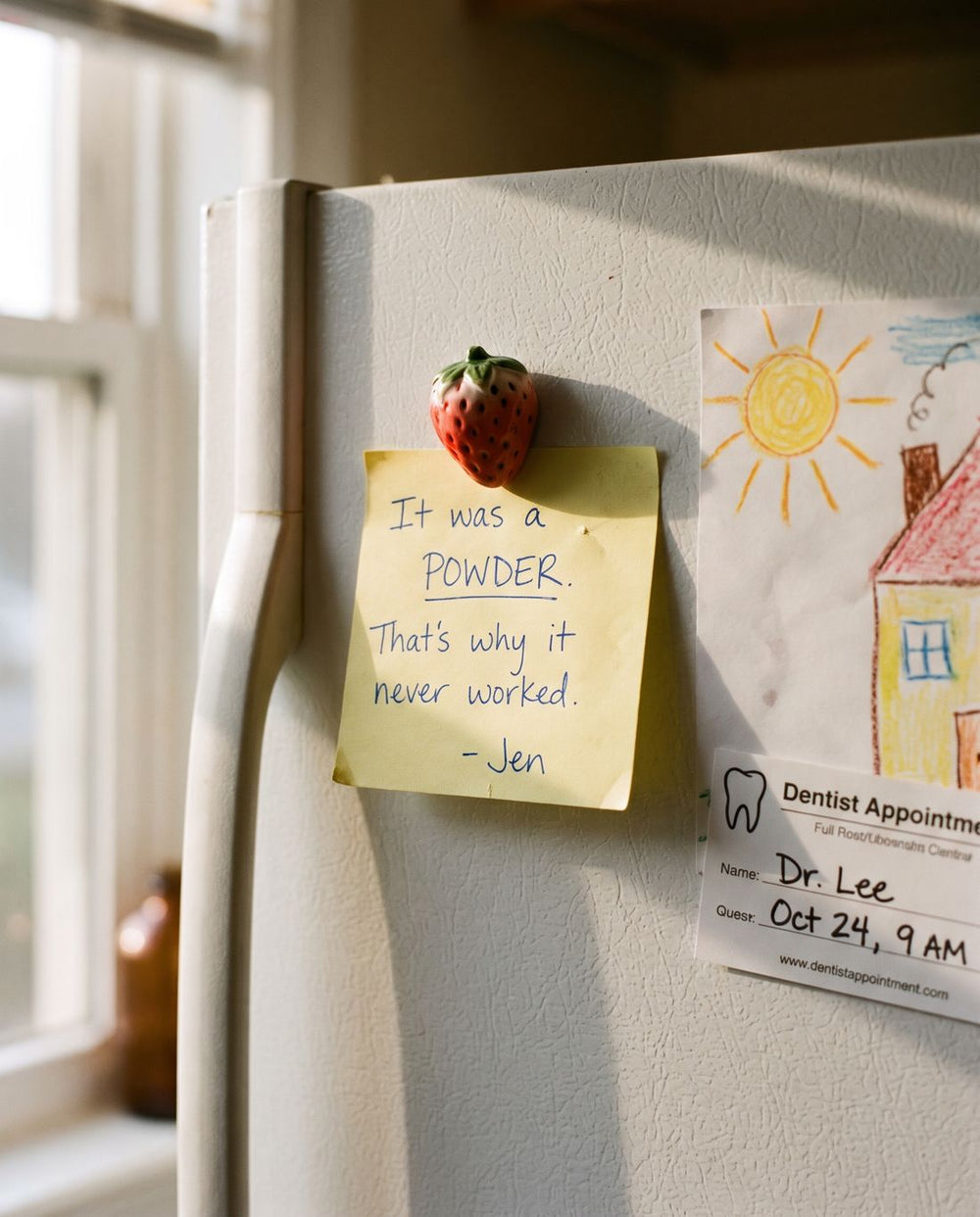
Dry powder. In a capsule. In a bottle we'd opened every single morning in a steamy bathroom for two months.What The Label Doesn't Tell You
Here's what I learned, in plain English.
- FU measures activity, not weight. The number on the label is what went into the factory, not what's still active when it reaches you.
- Dry powder is exposed. Every time you open the lid, air and moisture get in.
- Most capsules are low-dose. Often 2,000 FU, so you're told to take two or more.
- Most leave out K2. Natto is famous for nattokinase and vitamin K2. Most capsules copy one and skip the other.
None of that is printed on the front of the bottle.
What I Was Actually Looking For
I wasn't looking for a miracle. I was looking for nattokinase that was still nattokinase when Mom swallowed it.
Measured in FU, at a sensible dose. Not a 10,000 FU megadose that makes you light-headed.
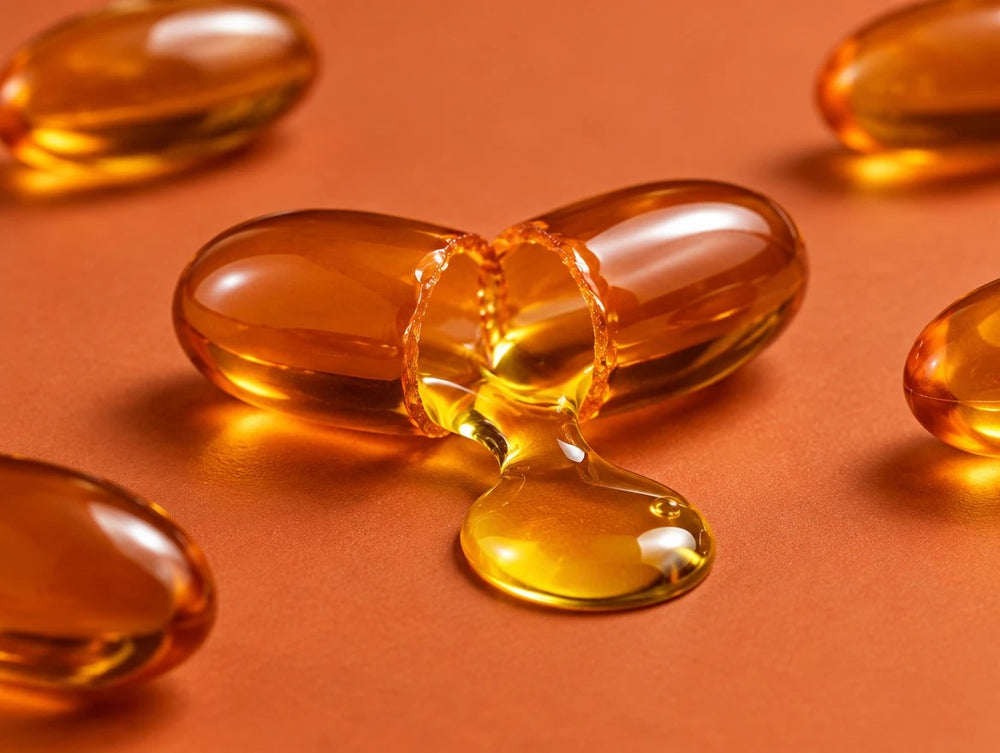
Sealed in oil, inside a softgel. Not a dry powder.
So calcium goes to bones, where you want it.
What We Switched To
The one that ticked every box is called Chōju Japanese Natto.
4,000 FU of nattokinase, sealed in MCT oil inside a softgel. 180 mcg of vitamin K2 (MK-7), 2,000 IU of D3 and 500 mcg of B12 in the same softgel. One a day with breakfast. No smell.
Let me be straight with you, because I'd want someone to be straight with me.
Chōju is not a medicine. It won't "cure" anything, and I'd be lying if I said it would. What there is research on is nattokinase and healthy circulation, which is why that's all Chōju claims.
And if your hands and feet are always cold, mention it to your doctor. That conversation costs nothing.
Eight Weeks Later
Mom takes one softgel with her coffee every morning. She doesn't think about it.
We kept score the way I'd suggest you do: how many pairs of socks she reached for at bedtime in week 1, and again in week 8. I'll let you do your own test rather than tell you what to expect, because everyone is different.
What I can tell you is she hasn't thrown this bottle in the bin.
The Reader Discount
I asked the Chōju team if they'd do something for people reading this, and they agreed: Buy 2, Get 1 FREE (3 bags), or Buy 3, Get 2 FREE (5 bags). With Subscribe & Save it works out to as little as 40¢ a day, and you can stop or cancel refills anytime.
And because you've already paid for nattokinase that did nothing, this matters: they give you 120 days. If it doesn't earn its place, contact their support team, say "refund," and you get every penny back. No need to send anything back. (Compare that with a lot of supplements bought on big marketplaces, where buyers complain they can't send them back even unopened.)
1. Nattokinase is not for you if you take blood thinners (warfarin, Eliquis, Xarelto, Plavix) or daily aspirin, have a bleeding disorder, or have surgery scheduled. Vitamin K2 can also interact with warfarin.
2. Chōju contains soy. Natto is fermented soybeans. Never stop or change a prescription to try a supplement.
With hope,
Laura M.
P.S. If you've got a half-empty bottle of nattokinase in your cabinet, check the label. If it says capsule and powder, you know what I know now.
P.P.S. Get at least 3 bags. Eight weeks is a fair test, and the 120-day guarantee covers you either way.
Comments
The questions readers send me most, and my answers.

That happened to my mom too. More isn't automatically better. What matters is whether the enzyme is still active when you swallow it. 4,000 FU sealed in oil was the sweet spot for us.
Like · ReplyCut one open. It's liquid inside a softgel, not dust in a capsule. That's the whole point.
Like · ReplyNot without talking to your doctor first. Nattokinase and vitamin K2 both matter if you take warfarin, Eliquis, Xarelto, Plavix or daily aspirin. Please don't skip that conversation.
Like · ReplyNo. Mom can't stand natto and takes it with her coffee. No smell, no aftertaste.
Like · ReplyThen you get your money back. 120 days, and you don't even have to send it back. That's the part that made me willing to try one more time.
Like · ReplySumi H. et al. (1987). A novel fibrinolytic enzyme (nattokinase) in the vegetable cheese Natto. Experientia 43:1110–1111.