
My Husband's Feet Were Ice Cold Every Night For 4 Years. Last Month He Asked Me To Turn The Heating Down
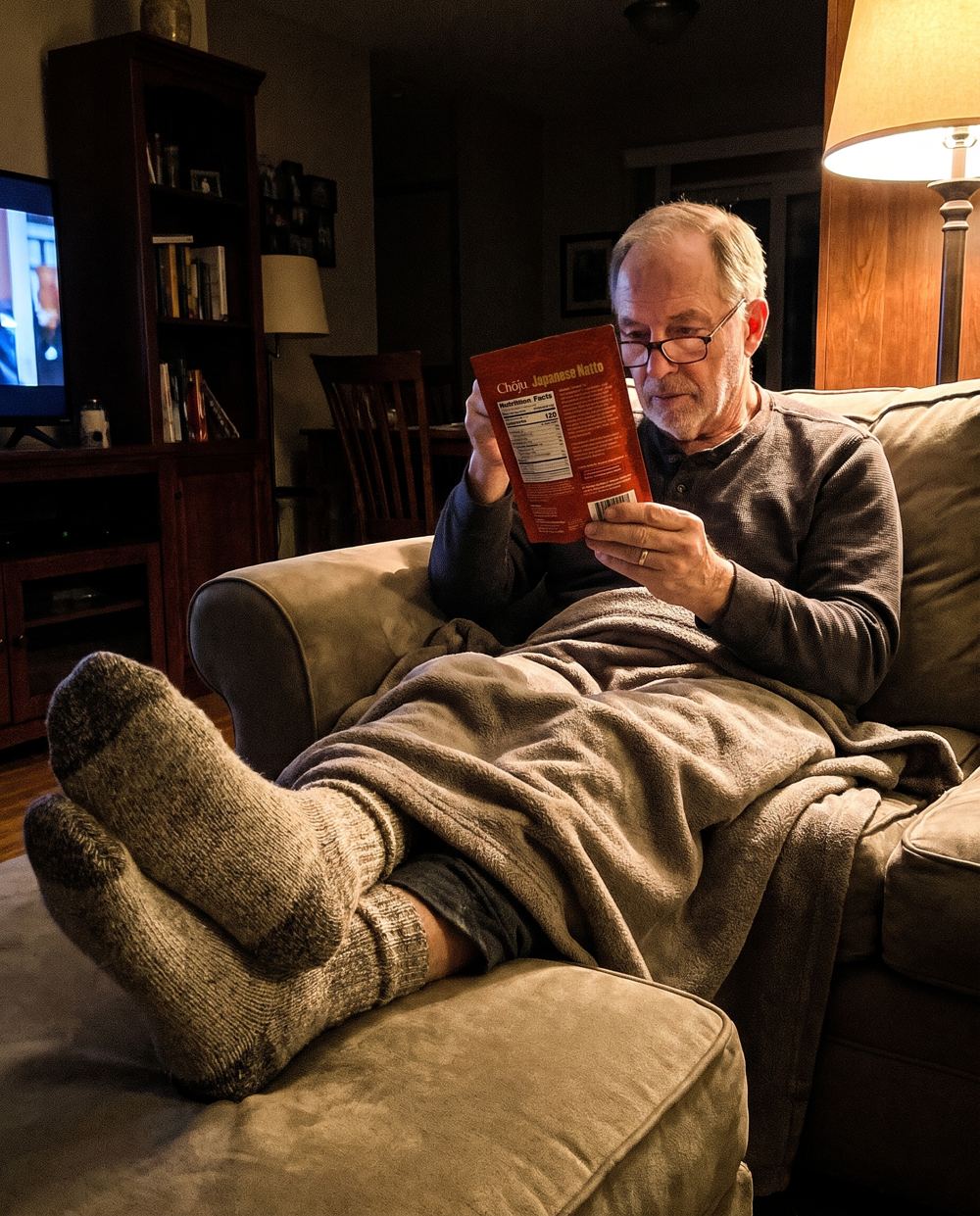
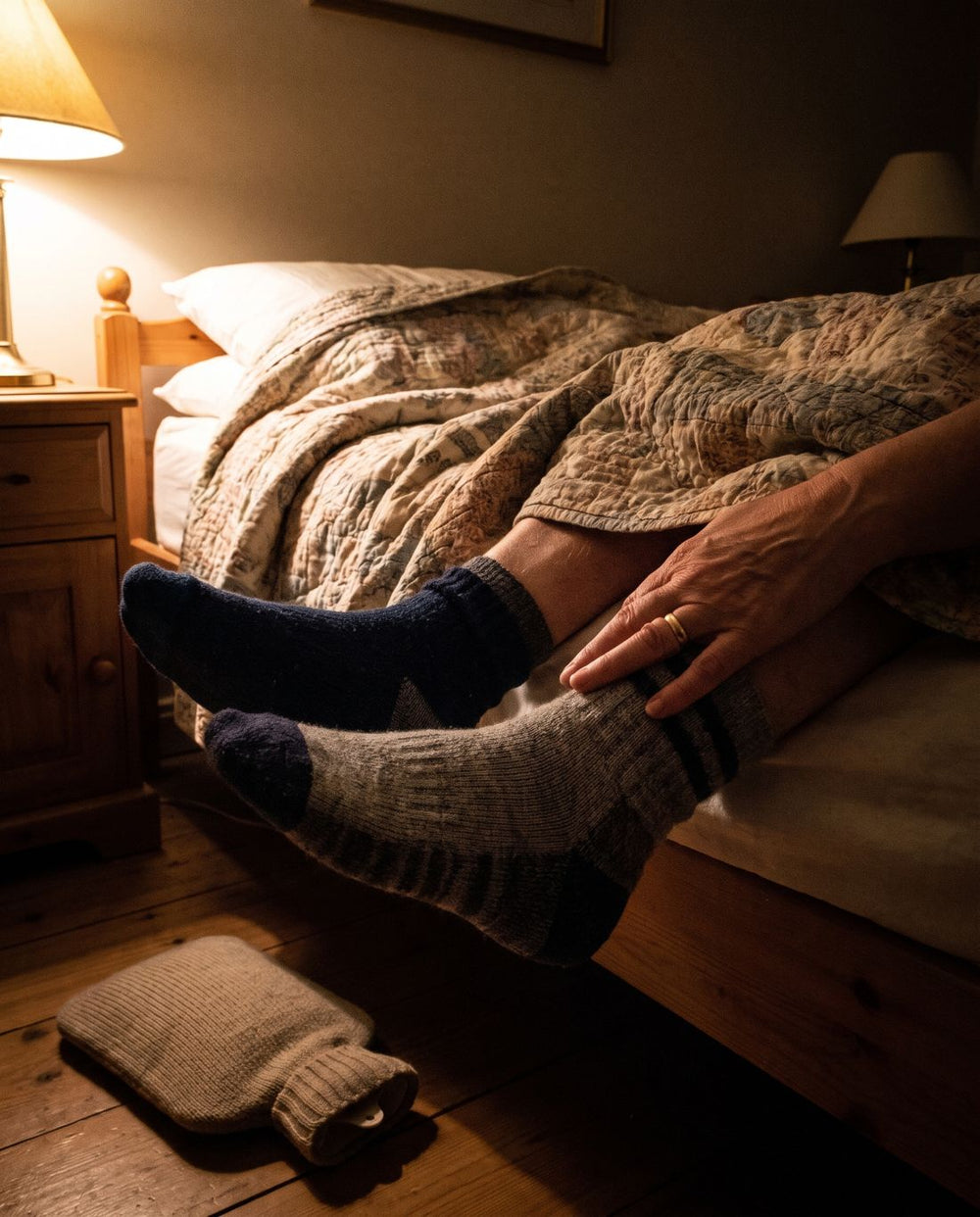
For four years, I went to bed next to two blocks of ice.
Every night, Ray's feet would find mine under the covers, and every night I'd jump.
He'd laugh it off. "Circulation of a lizard," he called it. But I'd also watched him nod off in his chair every afternoon by 2pm, and put his legs up on the coffee table by 5 because they felt "heavy."
He's 66. His father "went early." And Ray, like most men, was "fine."
The Problem With "I'm Fine"
If you're married to a man over 60, you know this conversation.
You leave an article on the counter. He doesn't read it. You mention it at dinner. He changes the subject. You suggest he sees someone. "I'm fine."
And every night, those feet.
What I Learned About Cold Feet
So I started reading for both of us.
Your hands and feet are at the very end of your circulation. Blood has to travel the farthest to get there, through the narrowest vessels. When circulation isn't at its best, that's usually where you feel it first.That's why cold feet at night get written off as "just age." But it isn't nothing. It's the end of the line telling you something.
A Japanese Food Most Americans Have Never Heard Of
In 1980, a Japanese researcher named Dr. Hiroyuki Sumi tested 173 foods, looking for one that could break down fibrin, a protein your body uses in clotting. Only one worked: natto, the fermented soybeans Japan has eaten with breakfast for 1,000 years.
Its enzyme, nattokinase, has been studied ever since for its role in supporting healthy circulation.
Of course, Ray was never going to eat a bowl of sticky, stringy beans that smell like old cheese. So I looked for a supplement.
Why The First One Didn't Work
I'll save you the money I wasted. The first bottle I bought was a dry powder in a capsule. Two a day. Nothing.
Then I learned nattokinase is an enzyme, and enzymes are fragile. Heat, air and moisture wear them down. A dry powder in a bottle you open every morning isn't protected from any of it.
What Finally Worked For Us
The one we use now is called Chōju Japanese Natto.

4,000 FU of nattokinase from real Japanese natto, sealed in MCT oil inside one small softgel. Plus 180 mcg of vitamin K2, 2,000 IU of D3, and 500 mcg of B12, which supports natural energy and which a lot of men over 60 absorb less of.
How I Got Him To Take It
This is the part I'm proudest of. I didn't lecture him.
I put the bag next to the coffee maker and took one myself every morning. After a week he asked what it was. After two weeks he was taking one too. No smell, nothing to mix, ten seconds.
Before he started, we showed the label to his doctor, because Ray takes a blood pressure medication. I'd tell anyone to do the same.
I want to be honest with you: Chōju is not a medicine. It's not a replacement for anything his doctor prescribes, and it won't "cure" anything. What there is research on is nattokinase and healthy circulation, and that's all Chōju claims.
Last Month
It was a cold night in October. I got into bed and reached for the thermostat to turn it up.
Ray said, "Leave it. I'm warm enough."
I'm not going to promise you the same, because everyone is different. But I'd suggest the test we used: count the socks at bedtime in week 1, and again in week 8.
A Discount For Readers
I asked the Chōju team if they'd offer something to readers of this page, and they agreed: Buy 2, Get 1 FREE (3 bags), enough for one of you for 90 days or both of you for 6 weeks. Or Buy 3, Get 2 FREE (5 bags). With Subscribe & Save it's as little as 40¢ a day.
And they give you 120 days. If it doesn't earn its place, contact their support team and you get every penny back. No need to send anything back.
1. Nattokinase is not for him if he takes blood thinners (warfarin, Eliquis, Xarelto, Plavix) or daily aspirin, has a bleeding disorder, or has surgery scheduled. Vitamin K2 can also interact with warfarin.
2. If he takes any medication, show the label to his doctor or pharmacist first. Chōju contains soy.
With hope,
Deb K.
P.S. Don't make it a lecture. Put it by the coffee and take one yourself. Habits are easier together.
P.P.S. Get the 3-bag deal. It lasts you both six weeks, and the 120-day guarantee covers you either way.
Comments
The questions readers send me most, and my answers.

That was Ray! Don't push. Leave it by the coffee maker and take one yourself. Curiosity did the rest for us.
Like · ReplyShow the label to his doctor first, like we did. And if he's on a blood thinner like warfarin, Eliquis or daily aspirin, nattokinase isn't for him without his doctor's okay.
Like · ReplyYes, we both do. The 3-bag deal lasts the two of us about six weeks.
Like · ReplyEveryone's different. Give it 8 weeks, one every morning, and keep score at bedtime. You have 120 days to decide.
Like · ReplyNo. Ray can't stand natto and has no idea it's in there.
Like · ReplySumi H. et al. (1987). A novel fibrinolytic enzyme (nattokinase) in the vegetable cheese Natto. Experientia 43:1110–1111.