
My Mom's 82-Year-Old Japanese Neighbor Gardens Barefoot In November. Her Answer To "How?" Was A 1,000-Year-Old Breakfast
My mom is 77. She wears two pairs of socks to bed.
Her neighbor, Mrs. Tanaka, is 82. Last November I watched her kneel in her garden in bare feet, pulling weeds, while Mom watched from the window in a fleece blanket.
So I did what any curious daughter would do. I walked over and asked her how.
She laughed and said one word: "Natto."
The Breakfast Japan Has Eaten For 1,000 Years
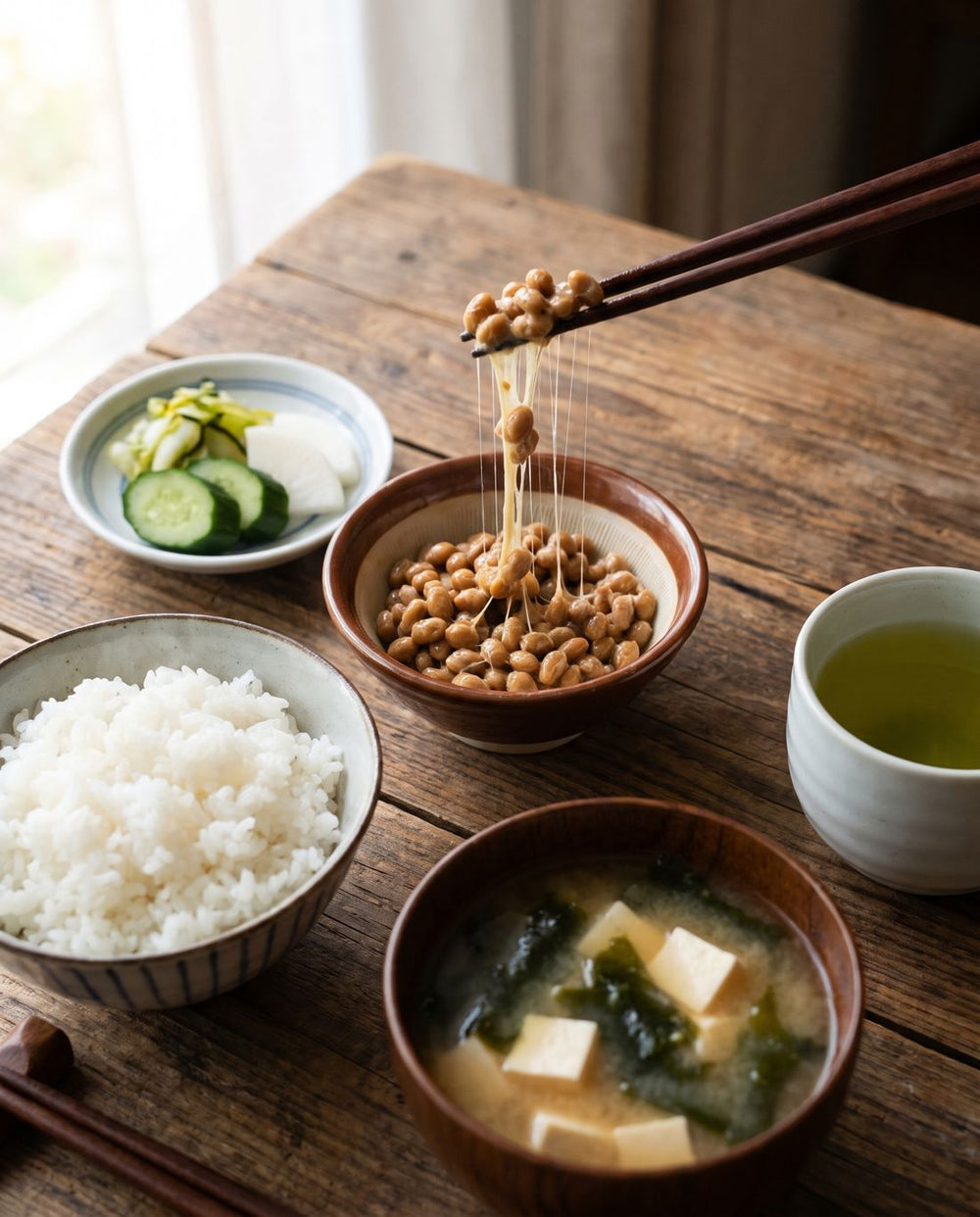
If you've never seen natto, it's fermented soybeans. Brown, sticky, stringy. Mrs. Tanaka has eaten a small bowl with rice every morning of her life, the way her mother and grandmother did.
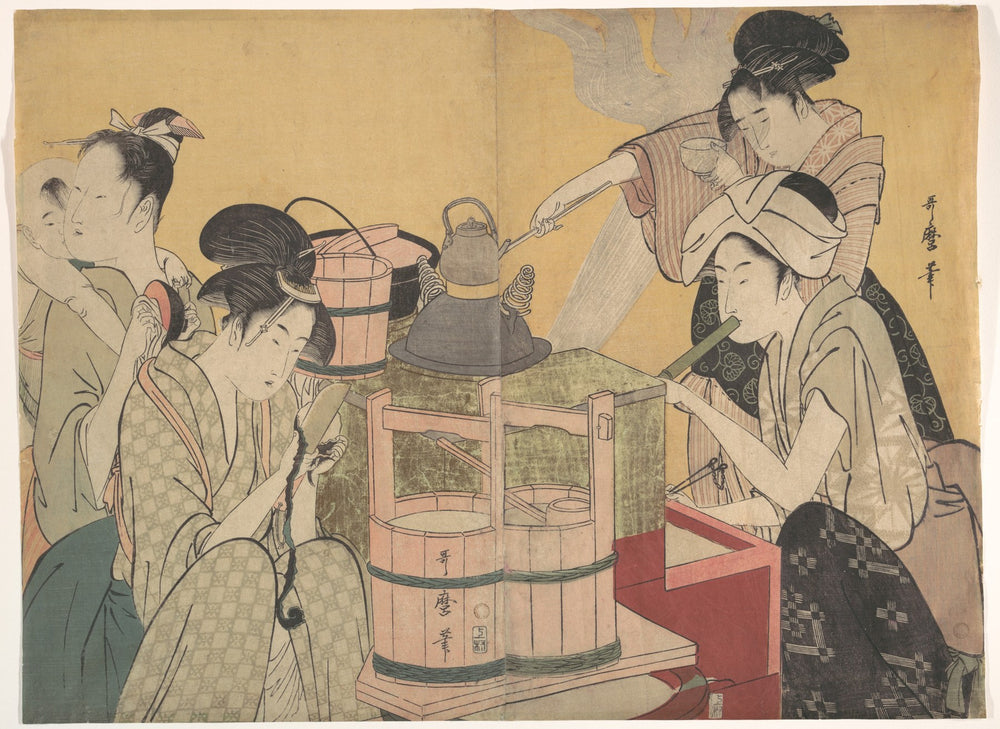
Japan is famous for having more people living past 100 than almost anywhere on earth. And natto shows up on Japanese breakfast tables again and again.
I'm not going to tell you natto is the whole reason. Diet, walking, community, genetics, all of it matters. But it made me curious enough to start reading.
173 Foods. Only One Worked.
In 1980, a Japanese researcher named Dr. Hiroyuki Sumi tested 173 foods, looking for one that could break down fibrin, a protein your body uses in clotting.
172 failed.
Natto didn't. He named its enzyme nattokinase, and it has been studied around the world ever since for its role in supporting healthy circulation.
And natto has a second gift: it's the richest food source of vitamin K2, which helps send calcium into your bones instead of letting it settle where it shouldn't.
Your hands and feet are at the very end of your circulation. When it isn't at its best, that's where you feel it first. Suddenly Mom's socks made a lot more sense.The Problem: Nobody In My Family Will Eat It
I bought natto from the Asian grocery store. Mom took one sniff and pushed the bowl across the table. "It smells like old cheese," she said. She wasn't wrong.
Even Mrs. Tanaka admitted plenty of people in Japan can't stand it.
So I looked for another way. And I learned something important: most nattokinase supplements are a dry powder in a capsule. Nattokinase is a fragile enzyme, and heat, air and moisture wear it down.
What We Found
The version we settled on is called Chōju Japanese Natto.
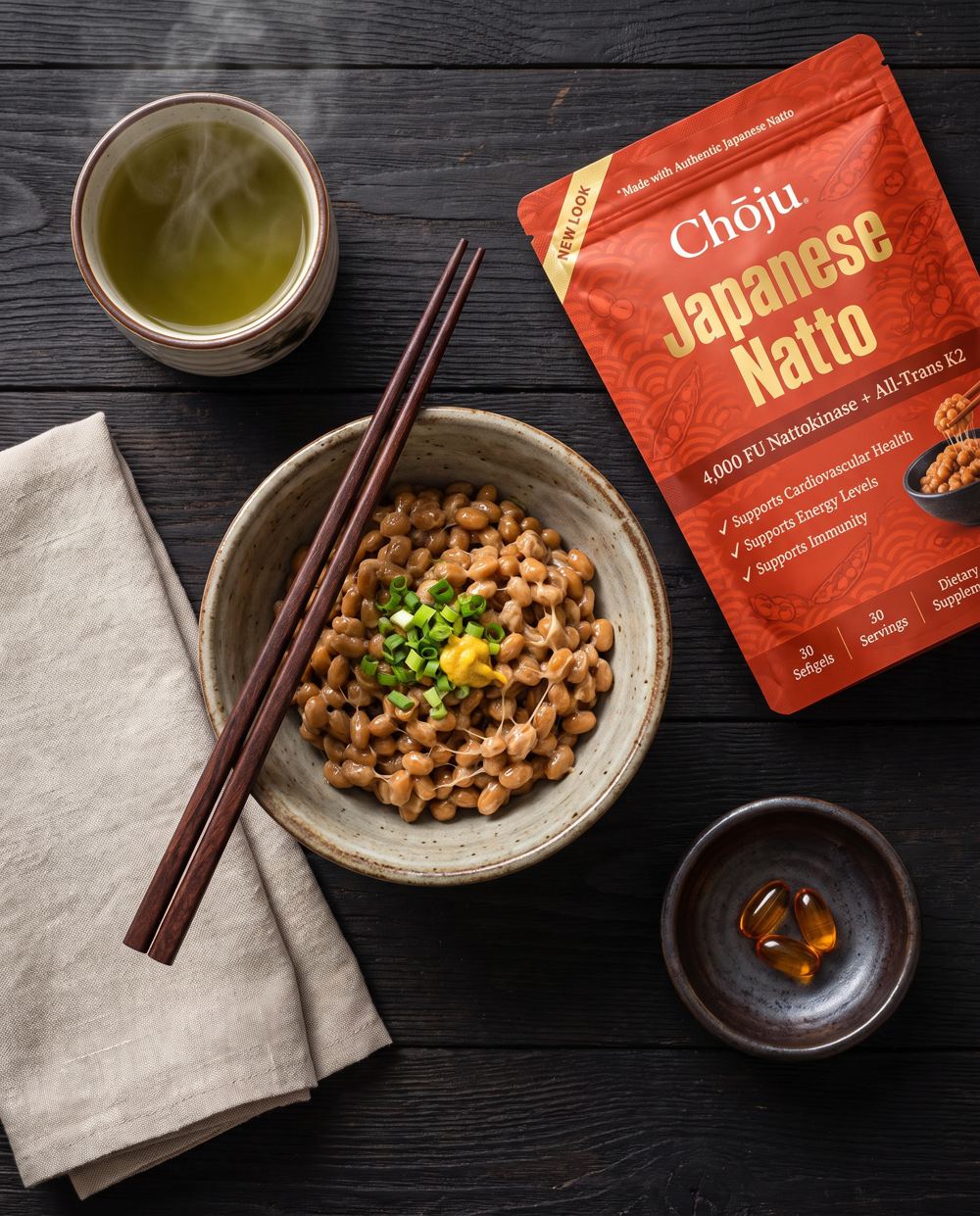
It takes what made natto famous, 4,000 FU of nattokinase and 180 mcg of vitamin K2, adds 2,000 IU of vitamin D3 and 500 mcg of B12, and seals it in MCT oil inside one small softgel. No sticky bowl. No smell.
Mom takes one with her coffee. When I told Mrs. Tanaka, she laughed and said, "Lazy natto." Then she asked where to buy it for her son in Ohio.
To be clear: Chōju is not a medicine and it won't "cure" anything. What there's research on is nattokinase and healthy circulation, and that's all Chōju claims. If your hands and feet are always cold, mention it to your doctor.
A Discount For Readers
I asked the Chōju team for a discount for readers of this page, and they agreed: Buy 2, Get 1 FREE (3 bags), or Buy 3, Get 2 FREE (5 bags). With Subscribe & Save it's as little as 40¢ a day, and you can stop or cancel anytime.
They also give you 120 days to decide. If it doesn't earn its place in your morning, contact their support team and you get every penny back. No need to send anything back.
1. Nattokinase is not for you if you take blood thinners (warfarin, Eliquis, Xarelto, Plavix) or daily aspirin, have a bleeding disorder, or have surgery scheduled. Vitamin K2 can also interact with warfarin.
2. Chōju contains soy. Natto is fermented soybeans.
With hope,
Laura M.
P.S. Japan didn't get a 1,000-year habit from a pill. But if you'll never eat the sticky bowl, this is the closest thing I've found.
P.P.S. Get at least 3 bags. Give it 8 weeks, one every morning, and judge it then.
Comments
The questions readers send me most, and my answers.

If you can, go for it! Most of us can't get past the smell and the strings. This gives you the nattokinase and K2 without the bowl.
Like · ReplyIt's made with authentic Japanese natto, fermented the traditional way with Bacillus subtilis natto.
Like · ReplyTalk to your doctor first. Nattokinase and vitamin K2 both matter if you take warfarin, Eliquis, Xarelto, Plavix or daily aspirin.
Like · ReplyGive it 8 weeks of one softgel every morning. You have 120 days, so there's no rush to judge it.
Like · ReplyNo. No smell, no aftertaste. Mom takes it with her coffee.
Like · ReplySumi H. et al. (1987). A novel fibrinolytic enzyme (nattokinase) in the vegetable cheese Natto. Experientia 43:1110–1111.